Showing posts with label mountaineering. Show all posts

Friday, January 1, 2010

Mountain Climbing or Mountaineering

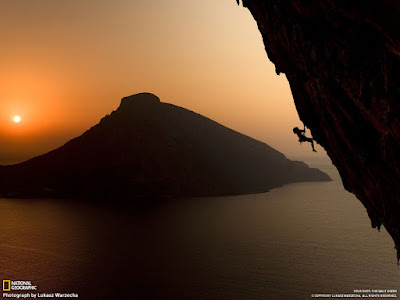
Mountain Climbing or MountaineeringMountain climbing, or mountaineering, is one of the oldest sports in the world. It is the timeless sport of scaling high slopes on a mountain with the goal of reaching the top, or summit, in mind. Mountaineering is actually a combination of many other sports, like snow, ice, and rock climbing as well as hiking and often camping. Mountaineering is lifestyle.

Much of the introductory mountain climbing done by beginners is little more than hiking up hill. Because there is such a range of difficulty levels and it is easy to start, mountain climbing is very popular. The basic climbs also seem much less intimidating than if people had to start off scaling a straight up rock wall.

The other exciting part is that there is such variety in the sport even at its most basic levels. In fact, one day of mountain climbing can get you everything from freezing temperatures to unbearable heat due to changes in altitude, weather, and basic sub angles. This variety offers you the opportunity to use skills like problems solving, climbing skills, and overall physical conditioning.

When beginning mountaineering as a sport, there is a lot to consider in terms of training and equipment. In the beginning, supplies that are necessary really only include those similar to hiking: tents, sleeping bags, and rations are obviously a must, but little else. However, as the difficulty level increases and the slope becomes tougher, climbers will need ropes and other actual climbing equipment to ensure safety. In extreme climbing situations, rock and ice climbing gear is needed beyond the ropes and hiking equipment.


So with all of this in mind, how do you get started if you think mountaineering might be for you? The first thing you must do is figure out which type of mountain climbing would be best for you. Each type of mountain climbing, no matter what level, does require a certain amount of personal fitness as well as an investment of time and money. Choose the one that sounds the most like something you would enjoy, rather than just looking for the one most commonly associated with more clout. Decide whether you like hiking more than climbing, what kind of weather you prefer to be active in, and how much cardiovascular effort you are willing to put into the sport. Once you have answered many of those questions, you will have an easier time deciding which type of climbing will work best for you.

In addition, as a beginner, it may be a good idea to consider hiring a mountain guide. Mountain guides are professionals who are adept climbers and skiers who can help lead you up a mountain safely. They know the terrain and can help you with what you need to know and what you need to do in order to get to the summit safely in some of your early climbs. As a beginner, spending time with a mountain guide is a great way to learn the basics of mountaineering before you try doing it on your own on a mountain you don’t really know. As a general rule with most anything, learning with a professional is the best and safest way to get your start. If your guide is certified, it means that he or she has done a number of trainings and has literally thousands of hours worth of personal experience climbing. Even if you are not a beginner, but you wish to advance a mountain that is beyond your skill set, a guide will be able to assist you with that climb.

For many a person globally, mountain climbing has become a complete lifestyle. For some, it becomes almost a complete obsession. However, for many, mountaineering makes a wonderful little distraction from the mundane nine to five living and routine family life. It fills the same gap that golf might for many others. In addition, pursuing mastery of various aspects of climbing is a challenge that can last you the rest of your life and keep you in good physical condition. Many find that as they master one aspect of climbing, they immediately find themselves obsessed with the next phase. You just may find that one day you are that obsessed mastering climber, but the only way to find out is to get out there and get started right away.
NEXT ->>...

Saturday, May 9, 2009

Taking Mountain Climbing Rescue Course

Taking Mountain Climbing Rescue Course. The following are some of the rescue mountain climbing courses offered by some of the premier emergency and rescue response institutions. They have also taught all and every manner of emergency outdoor response.

Rescue rock essentials

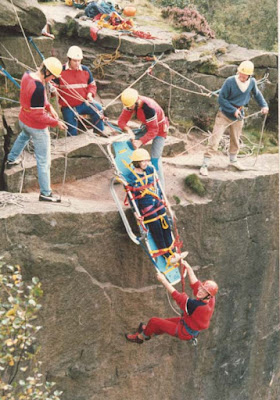
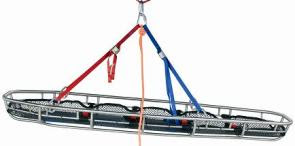
Mountain Climbing Rescue CourseThis is a rescue type course that offers an intro to rescuing the self through a series of rope systems especially for mountain climbing. Also offered is a three day course version. The focus of the rescue rock essentials is safety, lowering, raising as well as self rescue. Included in the course are safety rappelling, improvised stretchers as well as carries. Believe it or not, this course also comes with first aid info, it is a necessity that all mountain climbers have such basic first aid training.

Rescue high angle dynamics

This is a course that runs from 5 to 7 days and is specifically designed for the participants to be introduced to a wide range of basic skills rescue as well as transport for those injured in a difficult terrain or in high angled positions.

Much of the course involve procedures of extrication as well as rescue on vertical and steep rocks. Participants of this course are also introduced to rappelling, belaying, equipment and knots, carries, anchors, system raising, use of litter, system lowering as well as a wide range of technical subjects.

The fact of the matter is that there are two rescue stream courses offered, one is for leaders of wilderness as well as for professionals. Wild and hard rescue

This rescue is taken best by those cavers, climbers, river travelers whose role in a group is that of a leader. Any and all participants of this course need to have knowledge of basic knots and ropework.

The first level involve rescuing self as well as skills in handling a rope. Included in the course is rescue rappelling and a system of counterbalance. Ascenders and prusiks as well as their proper use is also included.

Mountain Climbing Rescue Course
Rescue high angle professional dynamics

This is a course that stretches to five days and is designed to help participants have a wide range of basic rescue transport and skills for those injured in a high angle or difficult situation.

Participants who have taken part in such courses have advised that their confidence and courage in being able to deal with challenging mountain climbing situations have increased. All in all, learning mountain climbing rescue courses is essential for those who do mountain climbing regularly. Cliché as it may sound, the life you save could just as well be yours.

Mountain Climbing Rescue CourseDesigned for high angle

Source : www.goarticles.com
NEXT ->>...

Friday, May 8, 2009

The Different Conditions Of Mountain Climbing

Mountain climbing is ascending elevated points of mountains or peaks. This is a challenge to those who dare themselves to heights. It is often done in groups because it not only requires individual skill but teamwork as a whole.

Mountain climbing is divided into three categories. The first one is hiking or trail climbing. This is the least difficult. Participants hike up trails to reach the top of a mountain. Trails are usually not that steep and the mountains are smaller compared to the rest.

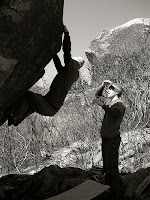
The second category is rock climbing. Here, participants climb up larger mountains, therefore the slopes are steeper. They have to go up using their hands and their feet plus a special equipment including rubber boots with thick soles. They have to bring with them steel pikes called pitons and rope to assist them.

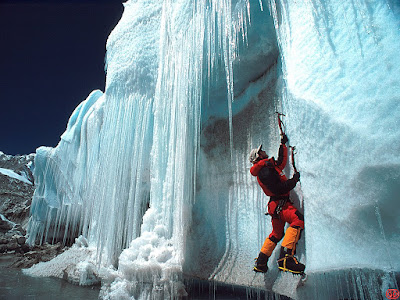
Ice climbing is the most difficult among the three. Here, participants climb extremely high mountains with peaks above the timber line. The equipment usually used in ice climbing are ice axes and boot spikes that are attachable (crampons).

Famous climbs over the years are those of ice and rock climbing. However, the first significant mountain climbing turning points were those at Mont Blanc. One was by Michel G. Paccard and Jacques Balmat in 1786 and Horace B. de Saussure in 1787.

Then there is the climb of the Ortles in 1804, Jungfrau in 1811, Finsteraarhorn in 1812 and Mont Pelvou in 1848.

Mountain climbing enthusiasts are all required to be aware of the various trail conditions that could take place on the day of their climb. Hikers must know that the weather is unpredictable and whatever changes might occur, this can affect their expedition.

Here are a couple of trail conditions and what a mountain climber must do once he encounters them:

  1. Open There are no restrictions. Any mountain climber can hike through the trail.
  2. Partial Some of the roads leading to a couple of paths are off limits for mountain climbers. Only a portion of the trail is accessible. This could be due to the snow, wildlife closure and trail damage right ahead.
  3. Closed Mountain climbers can no longer hike when this sign is up. A closed trail can be due to forest closure, road damage and wildlife closure.
  4. Snow The trail is still open but this sign warns the mountain climbers that there is snow in the area.
  5. Inaccessible The trail can't be accessed because of closure and road damage on the trails and the roads that are leading to it.
NEXT ->>...

Thursday, May 7, 2009

Become A Trainer For Mountain Climbing

Become A Trainer For Mountain Climbing. Most mountain climbers resort to the sport because they want to lose weight. Now what they do isn't rock climbing or ice climbing but trail hiking. Yes, trail hiking is considered to be mountain climbing - in fact, the easiest kind.

By hiking mountains that are 14,000 feet in range, a person can lose the unwanted pounds and get fit.

There are personal mountain climbing trainers to provide you with their services of teaching you the fundamentals in the sport. They arrange exercise programs most suitable for your lifestyle, your health and your schedule. All these will help you reach your goals.

You can log online and search for ads over the web. When you've decided on one, you will meet up and he will advise you on the kinds of exercises that you should do, as well as the correct way to do it.

The closer you get to your goal, the more specialized your activities will be. Your personal mountain climbing trainer takes note of your progress by recording it.

When you're ready, your personal trainer comes with you on a hike. Don't forget to bring boots, jacket, hydration pack and hiking polls. Your trainer will also give you first aid remedies and unexpected incidences that you should be aware of (so when it happens, you wouldn't panic.)

You should also note your altitude level. If you can't take the peak anymore, chances are you will feel dizzy. Figure out what range will give you altitude sickness. Normally, this occurs above 8000 feet.

Now, personal trainers are athletic and regularly go to the gym. If you live near the mountains, you won't have a hard time finding someone who is an experienced mountain trekker. Choose one who is also specializing in other outdoor work outs.

If there are no advertisements of personal trainers, then you can place an ad yourself. Or another option is you can ask stores selling hiking gear if they can recommend you to one. You can even go to your local gym and ask the personal trainers there if they can help you with mountain climbing. Buff people usually know other buff people.

The most important thing to remember is that you have the strength and endurance in this sport. This is very tiring and excruciating. It's also dangerous when done wrong. Don't worry too much about the trainer. Worry about yourself more. But if you feel confident and know you can do it, then trek the trail and have fun.

Website : www.goarticles.com
NEXT ->>...

Wednesday, May 6, 2009

Mountain Climbing For Everyone

Mountain Climbing For Everyone. Mountain climbing or mountaineering isn't only for men. At present, various women are engaging in this kind of sport. As Robyn Erbefield, a famous climber quoted, being a woman is no plus or handicap; men and women can climb. There are times when men can be stronger but women can also be strong.

Mountain ClimbingAlthough there are few distinctions between women and men who climb mountains, such that women are refined while men tend to be brute; both still enjoy the thrills of reaching the summit. It has been recorded that in 1659, there were 79 women who successfully climbed Mt. Everest and in the 1990's, 6 women climbed the mountain twice. It is very interesting to know that a good number of women are getting involved in mountain climbing.

Whether a woman is an experienced mountaineer or just a beginner, inherent danger is still present in climbing. One shouldn't take any precautions for granted. It will be useful to provide guidelines that can maximize any woman's safety. Consider the following sound advice:

  1. Before climbing, check on the temperature. Because mountain climbing can include rock and ">ice climbing, a climber can expect a subzero to extremely hot temperature. Proper training and skill development are vital. One can hire an instructor to properly advice her of the dos and don'ts in mountain climbing.
  2. Mountaineering involves difficulties of elevation, distance covered and the environmental conditions. There can be loose rock on the route. The climber should check the condition of lower offs and bolts. She should always check on her own harness and knots.
  3. Proper gear such as boots, jackets, pants and helmets should be prepared. Technical climbing equipment like ice axes, crampons and ropes should also be brought. Gears and equipment should be matched to the temperature when the planned climb will be executed. These things are essential once there is an increase in potential fall and slope angle.
  4. Even pregnant women want to continue their climbing. There is no problem with this unless it will be done during the first weeks of pregnancy. They should be aware of the risks they are taking. She should take it easy and slow down when she begins to feel heavy and tired. She should utilize a full body harness when a bump has increased.
Women engage in different extreme sports and mountain climbing proves to be an added challenge to their ability. They have been involved in mountaineering not just to be physically fit but to add adventure to their lives. There are many rewards associated with mountain climbing thus many women dedicate their lives to reach the highest and the most difficult peak they can climb.

Website : www.goarticles.com
NEXT ->>...

Monday, May 4, 2009

Techniques Of Mountain Climbing

Techniques Of Mountain ClimbingTechniques Of Mountain Climbing. If you're looking for a fun, enjoyable and exciting way to use up your free time, you can try mountain climbing. Studies show though that avid mountaineers are those who have no family, friends or loved ones. Why? Because this is a risky sport to engage in.

If you've fully decided to try mountain climbing, here are some tips that can help you reach the peak.

  1. Choose which mountain to climb. Decide on your route. Get the best one that is most suitable for you and your group. Remember to choose a mountain that is appropriate for the technique you will apply. For example, if you are using rock climbing techniques then choose a mountain that has a low-rising footpath. In that way, you won't be scraping your knees along the edges as much. If you also choose to hike through the summit but one that has overhanging ice, you won't be able to reach the top.
  2. You have to be aware that with each step you take, the terrain gets steeper. Therefore, there is less oxygen and the climate gets harsher. Each step you take is more difficult.
  3. Equip yourself with the proper gear. You can get these at any outdoor sports store. There are also some in junkyards or yard sales. But if you are investing in this activity, then you might as well get first-hand gear, right?

Your gear should include the following: - backpack - pair of boots - coat - canteen to be filled with water - food that would last you during your entire excavation - first aid kit - flashlight - sunscreen - sunglasses - map - friend or companion. Never climb alone.
You can also bring a rifle (to protect yourself from wild beasts out there) and enough ammunition. If you're ice climbing, bring an ice axe and warm clothing. Don't forget the rope because this will be very useful.

When you're actually climbing the mountain, you have to get to it first. Upon arriving at the base of the mountain, you have to know what you're doing before you start out. Always be safe with each step you take. Keep your ice axe within reach just in case the situation calls for it. Don't get hypothermia. Don't get lost. Don't panic. These are a couple of key rules. Most importantly, have fun.

Website : www.goarticles.com
NEXT ->>...

Mountaining

Mountaining. Up North, the Himalayan ranges are the most intimidating, enthralling and beautiful mountains in the world. For any mountaineer, the Himalayas are a perennial challenge.

The mountaineering season is normally between April and November but the winter seasons, though colder have clearer days.

MountainingThere is something new to see in every season and every region: the gentle slopes of the Garhwal and Kumaon region, the sharp ragged gorges of Kulu and Lahaul in Himachal Pradesh, the pristine untouched beauty of Sikkim, the almost unexplored Arunachal Pradesh, the fantastic moonscapes of the Zanskar range in Jammu and Kashmir.

The high altitude peaks of Nun-Kun Massif in Ladakh, Nanda Devi in Garhwal, and Dunagiri in Kumaon offer challenging peaks for mountaineering. In Kumaon, the popular areas are the Kalabaland glacier system, the Panch Chulhi, the Rajrambha, and Chaudhara peaks, and the peaks of the Nandakot basin.

Levels of Difficulty

Most mountaineering routes are graded, according to levels of difficulty and accessibility. A moderate degree would require very basic mountaineering techniques. These can be learnt at the Nehru Institute of Mountaineering at Uttarkashi and the Western Himalayan Institute of Mountaineering at Manali.

An advanced degree of mountaineering would require the mountaineer to be in absolute fit physical condition. Skills can be learnt either by actual experience or doing advanced courses at recognised institutes.

Mountaining
HISTORY OF MOUNTAINEERING

Mountain Climbing started for the first time in 1786 with the climb of two French,one is a doctor, to Mont Blanc (4807 mt), the highest summit of the Europe.After the first half of the 19th century in which there were some discovery and military purposed climbings, between 1850 and 1860 all the summits in Switzerland had been climbed by the climbers one after another.The period which was called the golden period of the European Mountaineering came to an end with the climb to the most difficult summit of the Alps,Matterhorn in 1865.After that, until the end of the century, all the summits of the Middle Europe had been climbed without failure.It was climbed to the highest summit of the Ands,Aconcagua (6960 mt) in 1897,Grand Teton (4190 mt) North America in 1898, St. Elias (5489 mt)Alaska in 1897 and the highest summit of North America,Mc Kinley (6194 mt) in 1913. In the first half of the 20th century, there were many climbs done by various mountaineers in addition to French,English and Swiss.

The most important climb was done to the Communism Summit (7495 mt),Pamir Mountain Chain. After the obvious calmness caused by the Second World War, French mountaineers climbed the most important summit of the Himalayas, Annapurnal (8138mt) in 1950. Right after that, all the other 8000 metres summits were climbed by the mountaineers one by one: Nanga Parbat (8138 mt) by Germans in 1953, K2 (8681 mt) by Italians in 1954,Lhotse (8516 mt) by Swiss in 1955, Makalu (8463 mt) by French.Among all those climbs ,the most sensational climb was the one done by Edmund Hillary and Tenzig Norgay to the most highest summit of the world, Everest (8848 mt) in 29 May 1953.The most difficult routes of the summits climbed in 1960s in Europe and America were attempted in the hard winter conditions. The most sensational one of those climbs was done to the 914 metres Sierra, Nevada Mountains by following the El Captain route in 1970 by Americans within 27 days.

Mountaining
The most important person of the high elevation mountaneering Reinhold Messner climbed Everest by going beyond 8000 metres defined as the deadline without using supplement oxygen with Peter Habbler in 1978.1980s was the period in which mountaineering was highly popularized.Millions of people in Europe and America started to wander along the mountains.Technological development in the mountaineering equipments and easiness of reaching to the mountains were the reasons for that widespread profession.From now on,it is possible to see queues on the path to the Mont Blanc's climbing route.It can be climbed to Himalayas only by reservations.It is possible to wander along the hills of 8000 metres and high elevation walks with the programs of the tourism organizations.Everest which is full until the year 2000,shows hospitality to the hundreds of climbers ,live broadcasts and many more people and as a result of all those activities it faces with an unbelievable pollution. Getting more and more crowded everyday not only brings this high pollution but also many accidents.

HIPOTERMI AND LOCAL FREEZING

Two most common sicknesses caused by cold are hipotermi and local freezing. Hipotermi is the decreasing of the body's interior temperature abnormally; local freezing is the freezing of some cells in the body's certain parts.To be able to prevent and to cease these sicknesses, firstly it must be known that how heat is produced and lost and reactions of the human body's to the cold.
NEXT ->>...

Friday, January 2, 2009

Blue Ice (glacial)

Blue Ice

Blue ice occurs when snow falls on a glacier, is compressed, and becomes part of a glacier that winds its way toward a body of water (river, lake, ocean, etc.). During its travels, all of the air bubbles that are trapped in the ice are squeezed out, and the size of the ice crystals increases, making it clear.

In some areas, earthquakes have raised the blue ice above the ground and created formations much like large frozen waves.

The blue color is often wrongly attributed to Rayleigh scattering. Rather, the ice is blue for the same reason water is blue: it is a result of an overtone of a OH molecular stretch in the water which absorbs light at the red end of the visible spectrum.

Runways

Blue ice is exposed in areas of Antarctic where there is no net addition or subtraction of snow. That is, any snow that falls in that area is counteracted by sublimation or other losses. These areas have been used as runways due to their hard ice surface which is suitable for aircraft fitted with wheels rather than skis.
NEXT ->>...